
Planning a wedding this year? So, you should start looking for the wedding venue now. There are so many options and not all the venues are available on your event date. However, if you don’t know how to choose a wedding venue, then there are some crucial factors that decide the right venue for you. These factors are the number of guests, location, capacity, convenience and budget. With hundreds of wedding venues available, finding the right one can quickly become confusing. Consider visiting the venue instead of believing the photographs. In this guide, we mention everything that matters to choose the best wedding venue.
Checklist to Find the Best Wedding Venue: 12 Points
Before finalizing your wedding venue, here is what you should consider-
1. Guest List
Start your preps with the guest list before searching for wedding venues near me. You should know the estimate of how many people you are actually planning to invite. Guest count can be one of your considerations because venue capacity directly affects your choice and overall cost.
Try to avoid choosing a venue based only on its maximum capacity.
Usually, a hall that technically accommodates 300 people may feel crowded if you need space for:
- Stage
- Dance floor
- Buffet
- Dining tables
- Mandap
- Entertainment setup
- Photography areas.
Consider the type of seating and event you are planning. A cocktail-style function, seated dinner, traditional wedding ceremony, and large reception can all require different amounts of space.
If you are planning several functions, also check whether the venue has separate areas for mehendi, haldi, sangeet, wedding ceremonies, and reception. Having suitable spaces within the same property can make the entire celebration easier to manage.
2. Set a Realistic Wedding Venue Budget
One of the biggest mistakes couples make is visiting venues before deciding what they can comfortably spend. A venue may look affordable from its advertised price but become considerably more expensive after catering, taxes, décor, accommodation, electricity, service charges, and other fees are added.
Instead of asking only, “How much does the venue cost?”, ask for the complete estimated cost.
Check whether the quotation includes:
- Venue rental
- Food and beverages
- GST and other applicable taxes
- Tables, chairs and basic furniture
- Décor or lighting
- Electricity and generator charges
- Parking or valet services
- Accommodation, if applicable
- Service charges
- Cleaning and setup charges
- Overtime charges
Ask the venue for a written quotation so you can compare the actual cost of different properties. The cheapest venue on paper may not be the cheapest once all additional charges are included.
3. Wedding Venue
Your preferred wedding style can significantly narrow down your options.
Lets take a scenario: a couple who’s looking for a traditional and grand celebration may prefer a palace, heritage property, or luxury hotel.
On the other hand, couples who are planning a contemporary wedding may prefer a modern banquet hall or resort. Outdoor lawns can work well for daytime ceremonies, while hotels and banquet spaces can offer greater convenience for large receptions.
Think about the experience you want your guests to have rather than selecting a venue simply because it looks attractive online.
Some common venue choices include:
Banquet halls: Suitable for large weddings, receptions, and celebrations where indoor space and convenient facilities are priorities.
Hotels and resorts: Useful when you want accommodation, catering, event spaces, and guest services in one property.
Palaces and heritage venues: Ideal for couples looking for a royal or traditional setting, particularly for destination weddings.
Outdoor lawns and gardens: Suitable for open-air ceremonies, daytime functions, and décor-focused celebrations, provided there is a reliable weather backup.
Farmhouses: Can offer larger outdoor spaces and greater flexibility, but couples should carefully check facilities, accessibility, catering arrangements, electricity, and permissions.
4. Location
This is another crucial point that helps you decide the wedding venue. It is more than just finding a beautiful property. Your priority should be that your guests can easily reach the venue and how much travelling will be required between different functions.
For local, you can even search for wedding venues near me on your browser and will see plenty of options available. So always look for:
- Road connectivity
- Parking
- Public Transport
- Traffic conditions during the hours when the event will take place.
In case of a destination wedding, accessibility is much easier than for local ones. You can prefer the nearest airport or railway station, transportation options, accommodation and the distance between the venue and guest hotels.
5. Venue Capacity
This part should not be assumed, you need to visit the venue, check the space and ask the venue coordinator about the capacity for your specific setup.
Let’s take an example: a venue that may accommodate 500 guests for standing events but significantly fewer guests for a seated dinner with a stage and dance floor.
Additionally, you can check the rooms and ensure whether the guests will have enough space, room, and seating during the ceremony, dining, stage, and entertainment areas.
6. Wedding Date and Season
Your wedding date can influence venue availability, pricing, weather, and guest convenience.
Popular wedding dates and peak seasons often have higher demand, so desirable venues may need to be booked well in advance. If your wedding date is flexible, ask the venue about weekday, off-season, or less popular dates that may offer better availability or pricing.
Weather is particularly important for outdoor weddings. A beautiful open lawn may be perfect in one season but uncomfortable during extreme heat, rain, or cold weather.
Always ask what happens if the weather changes. A proper indoor backup space can prevent a last-minute problem from affecting the wedding.
7. Catering Options and Food Policies
Food is one of the most important parts of an Indian wedding, so understand the venue's catering policy before booking.
Some venues have an in-house catering team, while others allow outside caterers. If outside catering is permitted, ask whether there are additional kitchen-use, service, or vendor charges.
Discuss your preferred cuisine, menu flexibility, tasting options, vegetarian and non-vegetarian arrangements, live counters, desserts, beverages, and service style.
If you are hosting guests from different regions, consider whether the caterer can accommodate different food preferences. A venue that offers menu flexibility can make the experience considerably better for guests.
8. Decor and Vendor Restrictions
The venue should work with your décor vision rather than limit it unnecessarily.
Ask whether you can hire your own decorator, florist, photographer, DJ, makeup artist, caterer, and entertainment vendors. Some properties have a preferred vendor list or charge additional fees for outside vendors.
Also check restrictions on:
- Hanging décor
- Fireworks
- Open flames
- Confetti
- Sound systems
- Lighting installations
- Floral arrangements
- Structural changes
- Event timings
These details may seem minor during the first visit but can become important once you start planning the actual wedding setup.
9. Guest Accommodation
If many guests are travelling from another city, accommodation should be considered alongside the venue.
A hotel or resort with rooms on-site can make a multi-day wedding much easier because guests do not need to travel between their accommodation and different functions.
Check the number of available rooms, room categories, pricing, breakfast arrangements, check-in and check-out policies, and whether additional accommodation is available nearby.
For destination weddings, also consider whether transportation will be required between hotels and the venue. A venue with excellent facilities but difficult accommodation logistics may create unnecessary inconvenience for guests.
10. Visit Your Shortlisted Wedding Venues
Online photographs are useful for creating a shortlist, but they should never be the only basis for your decision.
Try to physically visit your top three to five venues. During the visit, look at the actual event spaces and imagine your wedding setup.
Pay attention to the size of the entrance, guest movement, dining area, stage location, washrooms, parking, kitchen access, changing rooms, lighting, acoustics, and overall cleanliness.
If possible, visit around the same time of day when your main function will take place. An outdoor space can look very different in daylight compared with the evening, and noise, lighting, temperature, and surroundings can also change.
11. Ask the Right Questions Before Booking
Before paying an advance, ask the venue coordinator to clarify every important condition.
Some of the most useful questions include:
- What exactly is included in the quoted price?
- Is GST included?
- Is there a minimum guest or food guarantee?
- What is the cancellation and refund policy?
- What happens if the wedding date needs to be changed?
- Are outside vendors allowed?
- Are there additional vendor or corkage charges?
- What are the event timings?
- Are overtime charges applicable?
- Is there an indoor backup for outdoor functions?
- How many cars can the parking area accommodate?
- Is power backup available?
- Are there restrictions on music or décor?
- What are the payment milestones?
- Are there minimum room booking requirements?
NOTE: Do not rely only on verbal promises. Make sure important commitments are clearly mentioned in the agreement.
12. Read the Venue Contract Carefully
The contract is just as important as the venue itself. Read the complete agreement before making a significant payment.
Pay particular attention to cancellation terms, payment schedules, refund conditions, minimum booking commitments, overtime charges, vendor restrictions, food minimums, damages, event timings, and weather-related arrangements.
If something discussed during the venue visit is not mentioned in the contract, ask for it to be added or confirmed in writing.
This step can help prevent misunderstandings later in the planning process.
How to Compare Wedding Venues Before Making the Final Decision?
Once you have visited your shortlisted venues, avoid choosing immediately based on the first impression. Compare them using the same criteria.
Consider the venue's total cost, capacity, location, catering, accommodation, facilities, vendor flexibility, weather backup, guest convenience, and contract terms.
A simple comparison can help you identify which venue offers the best overall value. The goal is not to find the venue with the lowest price or the most luxurious appearance. It is to find the one that meets your priorities without creating avoidable compromises.
Are You Looking For Destination Wedding Venues in India?
If you are planning a destination wedding, then finding a venue would be more challenging. Since you don’t have an idea about the locality and other facilities like transportation, hotels, and other things. Whether you are looking for wedding venues in Udaipur, Rishikesh, Goa or another location, every location comes with its own specifications.
Firstly, understand your preferred wedding type-
- Royal
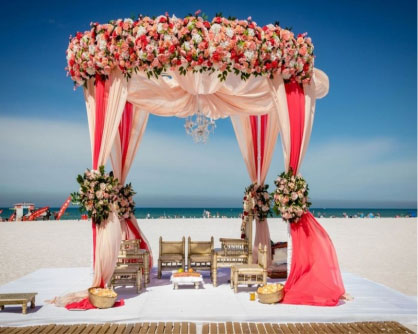
- Beachside
- Mountain
- Heritage
- Luxury resort
- Intimate celebration
The same principle applies to any destination: choose the location according to your guest profile and wedding requirements first, then select the venue.
Every venue may cost differently in every location, so your budget would be the biggest concern. You can get help from this guide: How Much Does a Destination Wedding Cost? - A Complete Budget Guide
Quick Formula to Select the Best Wedding Venue
If you are still confused between several options, use this simple decision making approach:
Right Wedding Venue = Guest Capacity + Budget + Location + Facilities + Wedding Style + Guest Experience
Avoid These Mistakes When Booking a Wedding Venue in India
Here are some of the common mistakes couples and families usually make when booking a wedding venue-
- One common mistake is booking a venue solely because it looks beautiful in photographs.
- Another is focusing on the rental price without calculating the complete cost.
- Avoid booking a venue without checking capacity, assuming outside vendors are allowed, or ignoring weather backup plans.
- Overlooking accommodation requirements and signing a contract without understanding cancellation or additional charges.
- Most importantly, do not feel pressured to book simply because a venue claims that another couple is interested in the same date.
Important: Take the time to compare your shortlisted options and understand the terms before making a financial commitment.
Sum Up
Are you looking for a wedding venue in Delhi, Noida, Rajasthan, Maharashtra, Bangalore, or anywhere else? Well, finding a venue is a really daunting task, which makes everything even more hectic for couples, especially those who come up with specific requirements. Well, you should always first make a list of factors that decide the right venue for you. It may include guest count, budget, preferred location, wedding style, and date. Then visit shortlisted venues and compare the total cost, check facilities, and vendor policies. Most importantly, check their online reviews for a better idea. With all this, you will be able to choose the best wedding venue in your location!